
Le Bonheur Children’s Hospital
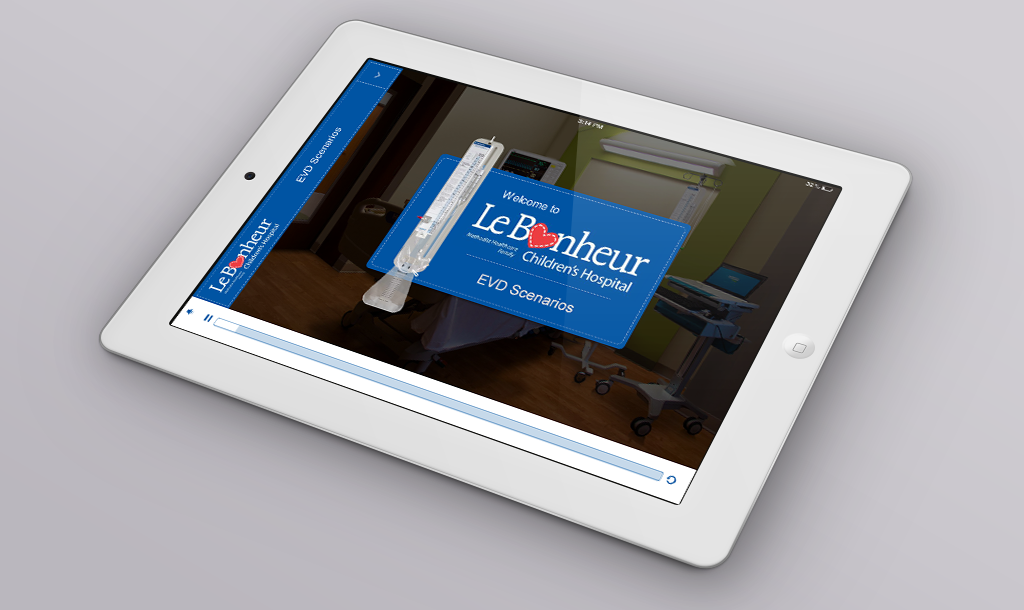
Le Bonheur Children’s Hospital is a premier pediatric facility in Memphis, Tennessee, that required a sophisticated interactive training tool for its nursing staff. This project focused on developing a high-stakes simulation environment informed by on-site clinical walkthroughs to replicate real-world medical scenarios.
Concept Development
The development of this course required a multidisciplinary approach, blending field research with a complex production pipeline to ensure clinical accuracy.
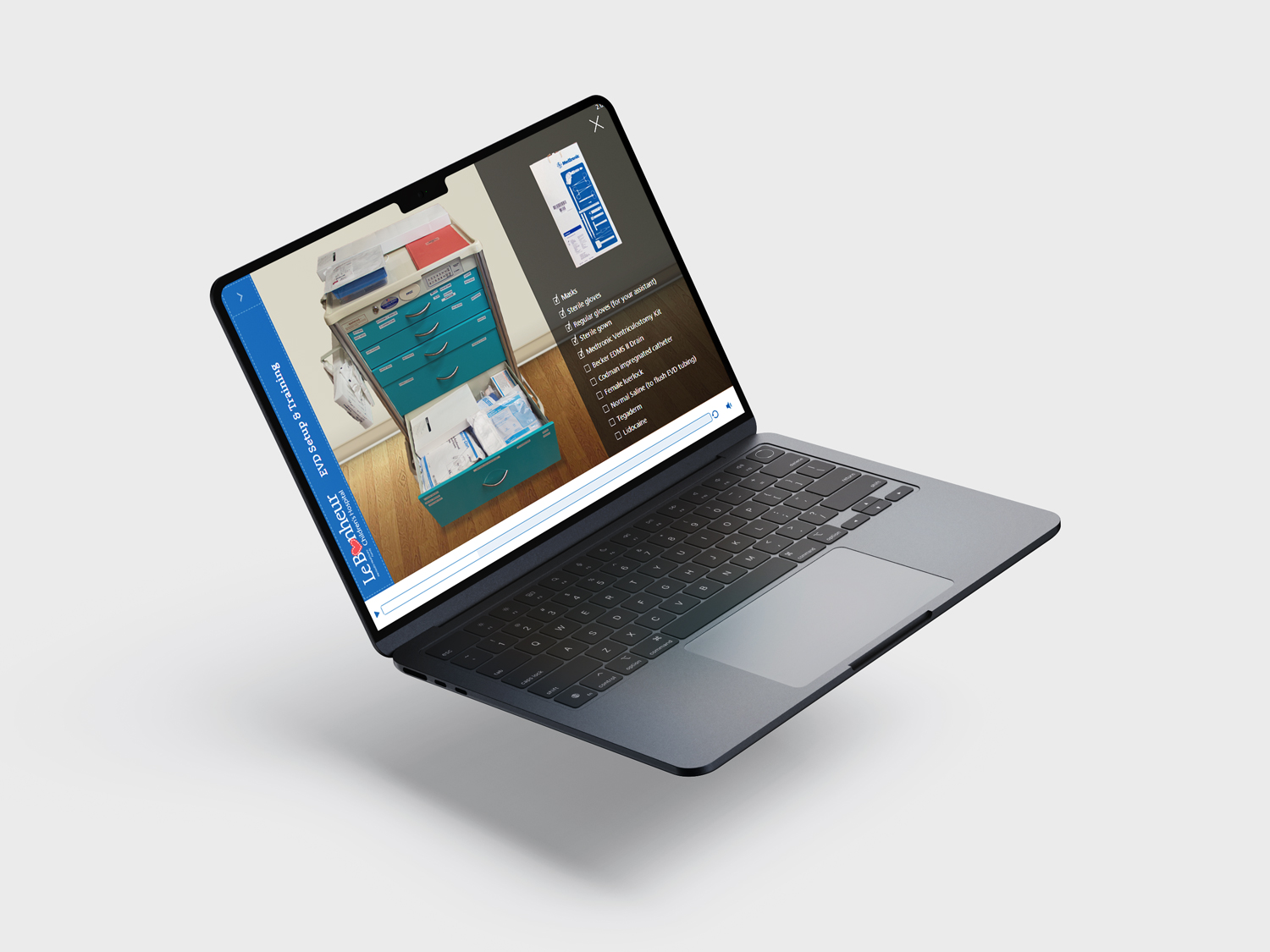
On-Site Asset Acquisition: Conducted comprehensive site visits at the Memphis campus, securing rare access to simulation labs and high-fidelity pediatric manikins. This allowed for the creation of a proprietary photo and audio library, ensuring every visual element was authentic to the Le Bonheur environment.
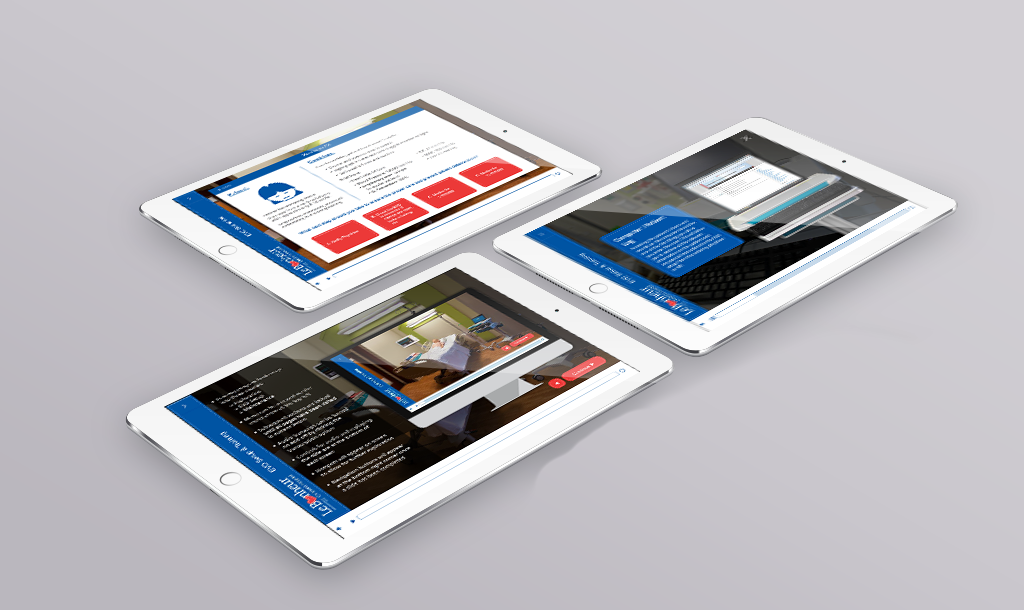
High-Fidelity Vector Design: Utilized Adobe Illustrator to develop a custom library of medical icons, interactive charts, and equipment interfaces. These were engineered with mathematical precision to maintain clarity across various display resolutions while mimicking actual hospital hardware.
Multimedia Processing: Leveraged Adobe Photoshop for advanced image manipulation of lab photography and Adobe Audition for cleaning and mastering on-site audio recordings, creating a sensory-rich environment that heightened the realism of the simulation.
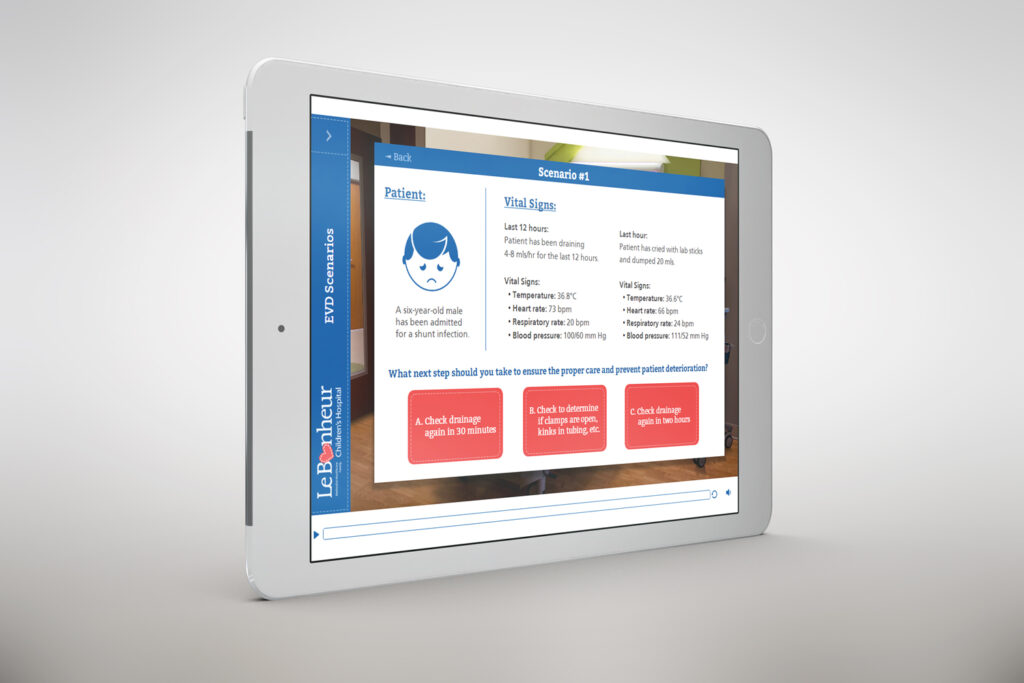
Advanced Simulation Engineering: Built the final experience in Articulate Storyline, utilizing complex variables and multi-layered branching logic. This allowed the training to respond dynamically to nurse input, mirroring the unpredictable nature of pediatric critical care, and allowing for low-stakes learning for high-stakes real-world care.
Description
Le Bonheur Children's Hospital
Goal
The objective was to create an immersive learning experience for both new and veteran nurses. Based on direct consultations and site visits with department leadership, the design needed to be medically accurate and highly engaging, ensuring that complex protocols for treating critically ill children were intuitive and effective.
Strategy
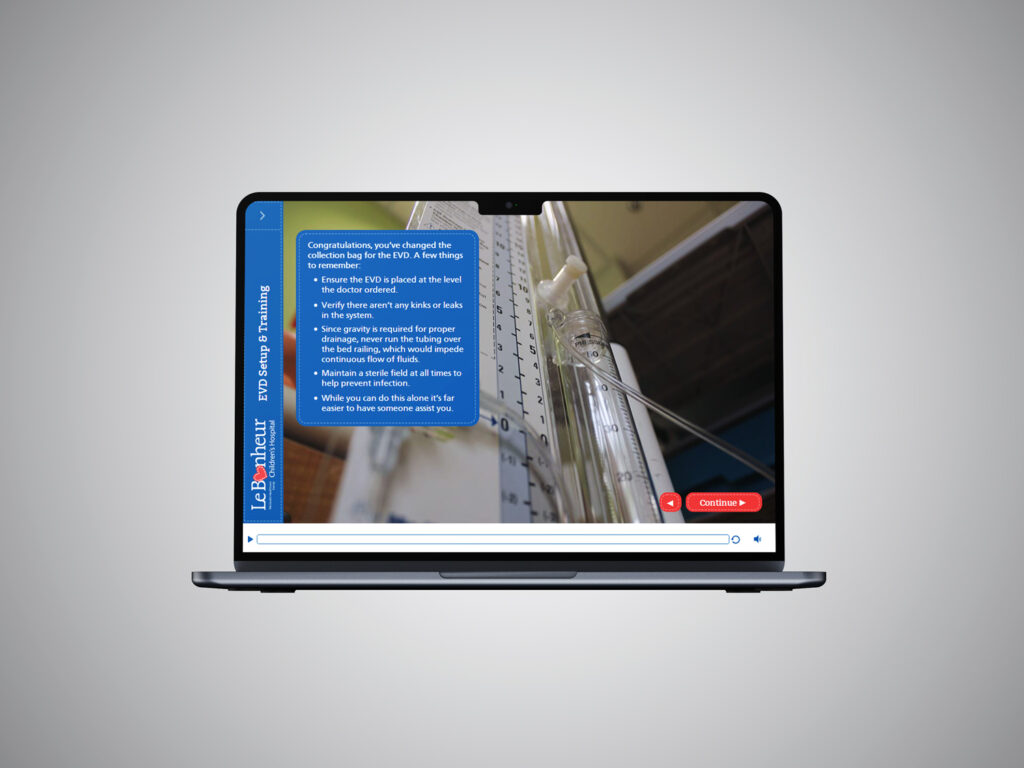
The visual strategy relied on authenticity to build trust with a clinical audience. By utilizing on-site photography and custom-designed medical assets, the interface mirrors the actual hospital environment. This research-led approach ensured that the digital simulations matched the physical reality of the Memphis facility, allowing nurses to focus entirely on patient outcomes.
Deliverables
Interactive Simulation Model: A branching-logic training tool designed to sharpen decision-making in high-pressure clinical situations.
Clinical Realism: Designing a layout that mimics medical monitors and bedside charts to reduce the gap between the training tool and the actual patient room.
Technical Precision: Using Adobe Illustrator to create high-fidelity medical iconography that maintains clarity while conveying complex data points.
Workflow Integration: Crafting a navigation flow based on the "head of department" walkthroughs, ensuring the simulation followed the logical steps a nurse would take during a real-world emergency.